FR
EN
Confirm order
LOG IN
Forgot your password ?
Identification
You can also use the following identification providers
New user? Create an account
Demo
Subscribe
Briefs
News
All articles
Sector
TODO: 80
Authorities
Congresses
Jurisprudence
Publications
Agenda
Regulation
All articles
European Commission
SCCS
ECHA
France
IFRA
International
Focus
TODO: 81
Trends
All articles
Ecoresponsability
Market
Tech / Digital
Consumers
Experts
TODO: 82
Ingredients
All articles
News
Ingredients search
Ingredients by categories
Products
All articles
Products news
Launches trends
Recalls of products
Pack
All articles
News
Ecoresponsability
Innovation
Basics
All articles
Dossiers
Advising consumers
The language of labels
Cosmetics glossary
E‑Library
Confirm order
Articles
…
Trends
All articles
Ecoresponsability
Covid
Market
Tech / Digital
Consumers
Experts
Trends
:
Experts
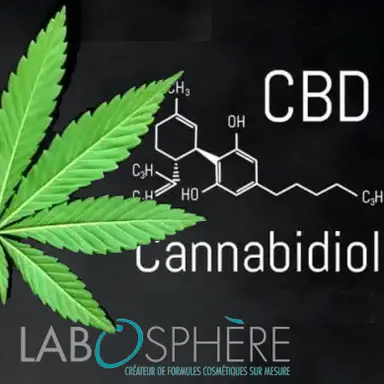
Ingredients in the news: cannabidiol
Even though cannabidiol has been gaining ground in cosmetics since 2020, it does raise questions. That’s why Estelle Dehier, from Labosphère, has chosen to focus on the continuation (and end) of the series devoted to these ingredients that are the talk of the town.
Ingredients in the news: Talc
Another chapter in the series by Labosphère’s Estelle Dehier on ingredients that are the talk of the town: once considered harmless, or even very popular, then caught up in the turmoil of safety warnings, before eventually being overtaken by regulations, restrictions and even bans… Episode 2 is devoted to talcum powder.
Ingredients in the news: salicylic acid
Some cosmetic ingredients are all the rage and are all the rage for years, but then cosmetovigilance reveals certain problems or toxicological requirements come into play, the regulatory axe falls, and the “flagship” ingredient becomes the one that absolutely must be boycotted. The first episode in this series by Estelle Dehier, from Labosphère: salicylic acid.
How to assess the safety of innovative cosmetic ingredients?
Cosmetic regulations require cosmetic products to be safe for human health under normal and reasonably foreseeable conditions of use. Before a product is placed on the market, a safety assessment must be carried out and signed off by a safety assessor. To do this, a range of data must be studied. A Toxicological Reference Value, generally derived from an animal study, must be determined for each s...
Misleading the consumer
The claims made on cosmetic product labels (and on all communication media, for that matter!) are clearly governed by European cosmetics regulations. They must be proven and justified in the Product Information Dossier (PIF) of the cosmetic product being developed. Estelle Dehier, from Labosphère, explains.
Wednesday, September 16, 2020
Introduction to solid cosmetics
More than a trend, today solid cosmetics is a market reality. What are the products most commonly found in this form? What are the “new” care rituals ...
Wednesday, September 2, 2020
Natural cosmetics: the consumer's vision, the formulator's challenge
In our first article on naturalness, we felt it was important and above all necessary to reframe the use of the word “natural” or “natural origin”, wi...
Monday, July 20, 2020
The place of essential oils in the Covid-19 crisis
Since the beginning of 2020, the SARS-COV-2 viral epidemic has spread so rapidly that on March 11, the WHO declared it a pandemic. To date, nearly 10 ...
Monday, July 13, 2020
Looking for a natural product? Okay, but which natural?
All the market research agencies say it: the Covid-19 crisis did not really give rise to new trends, but it strongly amplified all those that already ...
Wednesday, June 24, 2020
The Barbara Gould Saga, by Jean-Claude Le Joliff
The saga of old brands is a captivating exercise, often difficult because little is recorded and even less accessible. When you’re lucky enough to hav...
Tuesday, May 19, 2020
Liposomes, by Jean-Claude Le Joliff
According to recent studies, efficacy remains one of the key criteria for assessing cosmetic products. Beyond the natural, organic or vegan characteri...
Wednesday, April 29, 2020
Cosmetic tests: the precious value of the clinical scores
The implementation of the efficacy studies refers to the regulation of each world zone and sometimes each country. In Europe, the references are the E...
Tuesday, February 4, 2020
The "Non-functional Slack Fill" phenomenon in the cosmetics industry
The phenomenon is not new, and even if it is not particularly ethical, it is also seen in cosmetics. Non-functional Slack Fill, which refers to this n...
Monday, January 20, 2020
Risk assessment of poly- and perfluoroalkylated substances in cosmetic products
Poly- and perfluoroalkyl substances (PFAS), also known as fluoroalkyl, are an important group of substances used in a wide range of cosmetic products....
Tuesday, December 17, 2019
The importance of monitoring the photodegradation of cosmetic active ingredients
The cosmetic product as a mixture or the active principle of a cosmetic can be easily modified in their compositions under the influence of environmen...
Tuesday, July 9, 2019
Focus on cannabis in cosmetics
“Everything is poison, nothing is poison, it is the dose that makes the poison”, according to the famous formula of Paracelsus (1537). Does it apply t...
Wednesday, January 16, 2019
Microbiome and metagenomics: the link with products for the skin
The marketing of cosmetic products requires mastery of their regulation, but also a good knowledge of disciplines as varied as biology, physiology, ga...
Previous page
Next page
Please enable JavaScript to continue using this application.