FR
EN
Confirm order
LOG IN
Forgot your password ?
Identification
You can also use the following identification providers
New user? Create an account
Demo
Subscribe
Briefs
News
All articles
Sector
TODO: 80
Authorities
Congresses
Jurisprudence
Publications
Agenda
Regulation
All articles
European Commission
SCCS
ECHA
France
IFRA
International
Focus
TODO: 81
Trends
All articles
Ecoresponsability
Market
Tech / Digital
Consumers
Experts
TODO: 82
Ingredients
All articles
News
Ingredients search
Ingredients by categories
Products
All articles
Products news
Launches trends
Recalls of products
Pack
All articles
News
Ecoresponsability
Innovation
Basics
All articles
Dossiers
Advising consumers
The language of labels
Cosmetics glossary
E‑Library
Confirm order
Articles
…
Trends
All articles
Ecoresponsability
Covid
Market
Tech / Digital
Consumers
Experts
Trends
:
Experts
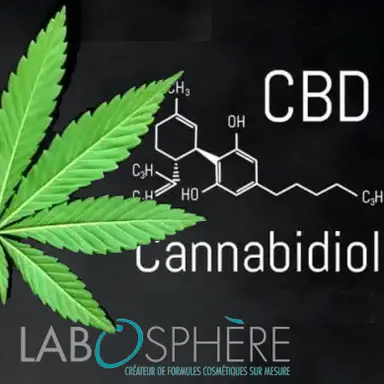
Ingredients in the news: cannabidiol
Even though cannabidiol has been gaining ground in cosmetics since 2020, it does raise questions. That’s why Estelle Dehier, from Labosphère, has chosen to focus on the continuation (and end) of the series devoted to these ingredients that are the talk of the town.
Ingredients in the news: Talc
Another chapter in the series by Labosphère’s Estelle Dehier on ingredients that are the talk of the town: once considered harmless, or even very popular, then caught up in the turmoil of safety warnings, before eventually being overtaken by regulations, restrictions and even bans… Episode 2 is devoted to talcum powder.
Ingredients in the news: salicylic acid
Some cosmetic ingredients are all the rage and are all the rage for years, but then cosmetovigilance reveals certain problems or toxicological requirements come into play, the regulatory axe falls, and the “flagship” ingredient becomes the one that absolutely must be boycotted. The first episode in this series by Estelle Dehier, from Labosphère: salicylic acid.
How to assess the safety of innovative cosmetic ingredients?
Cosmetic regulations require cosmetic products to be safe for human health under normal and reasonably foreseeable conditions of use. Before a product is placed on the market, a safety assessment must be carried out and signed off by a safety assessor. To do this, a range of data must be studied. A Toxicological Reference Value, generally derived from an animal study, must be determined for each s...
Misleading the consumer
The claims made on cosmetic product labels (and on all communication media, for that matter!) are clearly governed by European cosmetics regulations. They must be proven and justified in the Product Information Dossier (PIF) of the cosmetic product being developed. Estelle Dehier, from Labosphère, explains.
Thursday, July 22, 2021
Formulator: a profession in constant evolution
The profession of independent formulator has had to adapt very quickly with its time since the last thirty years. Today, he is no longer “satisfied” w...
Thursday, June 24, 2021
The profession of cosmetics formulator: from yesterday to today
“The pandemic and the containment allowed us to take a look at this job that we have been passionate about for over 16 years, that of cosmetic product...
Wednesday, June 2, 2021
The objectification of maskne and acne blemish claims
Skin imperfections classically cover a wide range of visible alterations of the skin, caused by a variety of causes. And today, the wearing of the mas...
Monday, May 10, 2021
Nanos today: definitions, harmonisation, formulator's challenges
“One of the most important issues that we deal with on a daily basis as a laboratory for the development of tailor-made cosmetic products is nanomater...
Thursday, March 25, 2021
Home-made and personalised cosmetics: regulatory and toxicological issues
In recent years, there has been a surge in “homemade” and customisable, even ultra-customisable, cosmetics. The lockdown caused by the Covid-19 pandem...
Wednesday, February 17, 2021
Hydroalcoholic gels: what you really need to know!
For almost a year now, the use of hydroalcoholic products has been part of our daily routine, several times a day. During an inspection campaign, the ...
Thursday, January 14, 2021
A short regulatory tour of the world for formulators
When we develop a cosmetic product, we think about galenics, texture, technical constraints, efficiency… but not only that! The formulator must also t...
Thursday, December 10, 2020
Gemmology: a stone in the cosmetic edifice
Today’s cosmetics industry prides itself on regularly creating new concepts or inventing new positioning. Nowadays, it is common to find, in the so-ca...
Thursday, December 3, 2020
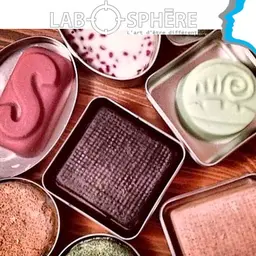
The different challenges of solid cosmetics
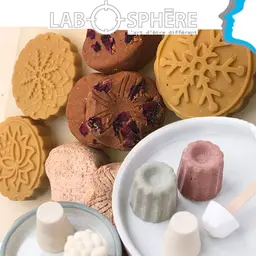
When we talk about solid cosmetics, we know that the consumer who is going to buy and use these products is motivated by curiosity to discover new gal...
Thursday, November 26, 2020
The toxicologist expert... for the safety of all!
The use of cosmetics is universal and certainly dates back to ancient times. In contemporary times, the use of cosmetics is taking off with the scient...
Monday, November 16, 2020
Upcycling, as seen by Jean-Claude Le Joliff
Upcycling, the process of recovering unused or waste raw materials and transforming them into value-added ingredients, is a current trend. As is often...
Thursday, October 29, 2020
Solid cosmetics: manufacturing processes and challenges for the formulator
Cosmetic products in solid form are more than a fashion, they are a market reality. As a reminder, in four years, the market for solid cosmetics has i...
Previous page
Next page
Please enable JavaScript to continue using this application.