FR
EN
Confirm order
LOG IN
Forgot your password ?
Identification
You can also use the following identification providers
New user? Create an account
Demo
Subscribe
Briefs
News
All articles
Sector
TODO: 80
Authorities
Congresses
Jurisprudence
Publications
Agenda
Regulation
All articles
European Commission
SCCS
ECHA
France
IFRA
International
Focus
TODO: 81
Trends
All articles
Ecoresponsability
Market
Tech / Digital
Consumers
Experts
TODO: 82
Ingredients
All articles
News
Ingredients search
Ingredients by categories
Products
All articles
Products news
Launches trends
Recalls of products
Pack
All articles
News
Ecoresponsability
Innovation
Basics
All articles
Dossiers
Advising consumers
The language of labels
Cosmetics glossary
E‑Library
Confirm order
Articles
…
News
All articles
Sector
Authorities
Congresses
Jurisprudence
Publications
Agenda
News
:
Publications
A study questions the safety of "dermatological" cosmetics
A recent French study, published in the Journal Annales de Dermatologie et de Vénéréologie - FMC, scrutinised the INCI lists of cosmetics used in dermatology. The results: only 15% of them were free of ingredients of concern to the target population.
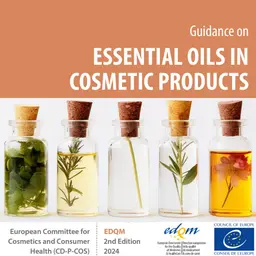
Essential oils: EDQDM publishes a revised version of its Guidance
The EDQM (European Directorate for the Quality of Medicines & Healthcare), a body of the Council of Europe, has just published the second version of its “Guidance on essential oils in cosmetic products”, a reference document on best practices for safety assessment.
IARC classifies Methyl eugenol in Group 2A and Isoeugenol in Group 2B
On 13 September 2024, the IARC (International Agency for Research on Cancer) published Volume 134 of its Monographs, with the results of its evaluation of the carcinogenicity of Methyl Eugenol and Isoeugenol, two fragrance ingredients commonly used in cosmetics.
IARC classifies talc in Group 2A
On 5 July 2024, the IARC (International Agency for Research on Cancer) released the results of its evaluation of the carcinogenicity of talc, announcing that it had been classified in Group 2A of substances “probably carcinogenic to humans”. A summary has just been published as an article in The Lancet Oncology.
A study into the occupational exposure of hairdressers to resorcinol
This will be the first epidemiological study conducted in France into the occupational exposure of hairdressers to resorcinol and the effects on the thyroid. It will be carried out by the Institut national de recherche et de sécurité (INRS) in partnership with the occupational health and prevention services (SPST), involving a total of 450 people.
Wednesday, October 25, 2017
A study on the biological effects of screen-emitted light on skin
Artificial visible light is everywhere in our modern life. Our mode of social communication confronts us with screens of all kinds and their use is on...
Wednesday, October 5, 2016
Nano-titanium dioxide in toothpastes: adverse effects on liver
According to a study carried out by the National Institute for Public Health and the Environment (RIVM), health effects due to exposure to titanium di...
Wednesday, July 27, 2016
Scientists find unprecedented protection against UVA
Researchers from University of Bath and with King’s College London announce they developed a new compound that London offers unprecedented protection ...
Friday, July 1, 2016
Supercritical CO2 extraction and Metabarcoding
Within the framework of the environmental respect we study a ginger extract obtained with supercritical fluids and more particularly CO₂. This process...
Wednesday, June 15, 2016
Sunscreens: a scientific paper in favour of nanos
The report, published in the Medical Journal of Australia, is authored by Paul Wright of RMIT University in Melbourne and funded by the public Nationa...
Monday, May 23, 2016
Mathematical modelling to test cosmetics
Researchers at the University of Cincinnati (UC) are presenting collaborative research on the use of mathematical methods for understanding the transp...
Thursday, May 19, 2016
The subtle effects of nanoparticles on oxidative stress genes
A nanoparticle can have subtle effects on the activity of genes expressing enzymes that address oxidative stress inside two types of cells, although t...
Wednesday, May 11, 2016
Scientific consensus on the identification of endocrine disruptors
On the occasion of an expert conference organised by the Federal Institute for Risk Assessment (BfR) and held in Berlin on 11 and 12 April 2016, a con...
Wednesday, March 16, 2016
A Danish evaluation of sensitizing fragrance substances
The project “Evaluation of selected sensitising fragrance substances” was initiated by the Danish Environmental Protection Agency as a LOUS (List of U...
Monday, March 14, 2016
3 days of 'free-of' cosmetics: less endocrine disruptors in the body!
A study led by researchers at UC Berkeley and Clinica de Salud del Valle de Salinas demonstrates how even a short break from certain kinds of makeup, ...
Tuesday, March 8, 2016
A gene for grey hair… and its cosmetic applications
The first gene identified for greying hair has been discovered by an international University College London-led study, confirming greying has a genet...
Tuesday, March 1, 2016
Assessment of nano-enabled technologies in cosmetics
As a part of the ‘Better control of nano’ initiative 2012-2015, the Danish Environmental Protection Agency published a report on nano-enabled technolo...
Previous page
Next page
Please enable JavaScript to continue using this application.