FR
EN
Confirm order
LOG IN
Forgot your password ?
Identification
You can also use the following identification providers
New user? Create an account
Demo
Subscribe
Briefs
News
All articles
Sector
TODO: 80
Authorities
Congresses
Jurisprudence
Publications
Agenda
Regulation
All articles
European Commission
SCCS
ECHA
France
IFRA
International
Focus
TODO: 81
Trends
All articles
Ecoresponsability
Market
Tech / Digital
Consumers
Experts
TODO: 82
Ingredients
All articles
News
Ingredients search
Ingredients by categories
Products
All articles
Products news
Launches trends
Recalls of products
Pack
All articles
News
Ecoresponsability
Innovation
Basics
All articles
Dossiers
Advising consumers
The language of labels
Cosmetics glossary
E‑Library
Confirm order
Articles
…
Trends
All articles
Ecoresponsability
Covid
Market
Tech / Digital
Consumers
Experts
Trends
:
Experts
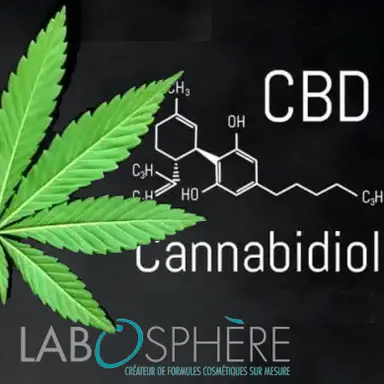
Ingredients in the news: cannabidiol
Even though cannabidiol has been gaining ground in cosmetics since 2020, it does raise questions. That’s why Estelle Dehier, from Labosphère, has chosen to focus on the continuation (and end) of the series devoted to these ingredients that are the talk of the town.
Ingredients in the news: Talc
Another chapter in the series by Labosphère’s Estelle Dehier on ingredients that are the talk of the town: once considered harmless, or even very popular, then caught up in the turmoil of safety warnings, before eventually being overtaken by regulations, restrictions and even bans… Episode 2 is devoted to talcum powder.
Ingredients in the news: salicylic acid
Some cosmetic ingredients are all the rage and are all the rage for years, but then cosmetovigilance reveals certain problems or toxicological requirements come into play, the regulatory axe falls, and the “flagship” ingredient becomes the one that absolutely must be boycotted. The first episode in this series by Estelle Dehier, from Labosphère: salicylic acid.
How to assess the safety of innovative cosmetic ingredients?
Cosmetic regulations require cosmetic products to be safe for human health under normal and reasonably foreseeable conditions of use. Before a product is placed on the market, a safety assessment must be carried out and signed off by a safety assessor. To do this, a range of data must be studied. A Toxicological Reference Value, generally derived from an animal study, must be determined for each s...
Misleading the consumer
The claims made on cosmetic product labels (and on all communication media, for that matter!) are clearly governed by European cosmetics regulations. They must be proven and justified in the Product Information Dossier (PIF) of the cosmetic product being developed. Estelle Dehier, from Labosphère, explains.
Tuesday, September 4, 2012
To a regulation at cost?
The implementation of the new Regulation is going on; I must confess I’m surprised by how low is the anticipation of the actors as a whole. However, c...
Monday, July 2, 2012
For a multiple-facetted cosmetic industry
During a recent conference, Karl Lintner correctly referred to the fact that the term “active cosmetic ingredient” should not be used to every word. I...
Monday, June 4, 2012
The tyranny of the immediate
Recently, while I was reading a paper by Jacques on our relationship to time, a short time after the In Cosmetics exhibition, the link between these t...
Previous page
Please enable JavaScript to continue using this application.